
Joe (2013)
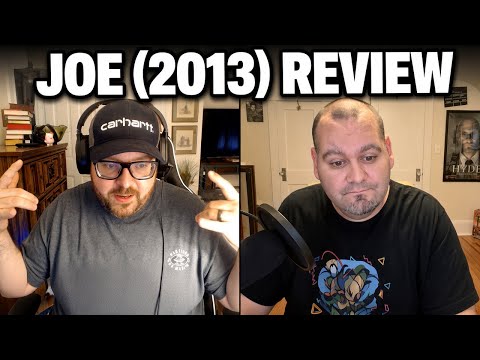
Watch the discussion
This discussion includes spoilers.
Watch the episode on YouTubeThe written companion
Joe (2013): Dan Found a Different Nicolas Cage. Matt Found an Old Favorite.
Dan needed convincing to watch Joe. His recent experiences with Nicolas Cage hadn’t left him eager for another film built around the actor’s outsized personality, but Matt insisted this was a performance worth seeing. Forty minutes of Picture This later, Dan is calling it one of Cage’s best. Matt, who recommended the movie alongside Mud, has rediscovered a favorite that turned out to be considerably darker than he remembered. They finish at four stars and five, respectively, with a disagreement that comes down to how much a movie’s ending should count against everything it gets right.
Directed by David Gordon Green, Joe follows a troubled ex-convict who runs a tree-poisoning crew and takes a young worker, Gary, under his wing. Gary needs a wage, but he also needs an adult he can depend on. His father, Wade, is abusive, and Joe’s willingness to teach him, pay him, and look out for him gradually becomes something more than a working relationship. With Tye Sheridan playing the younger character, it’s easy to see why Matt paired this with Mud. Both films put a boy in the orbit of an older man with a past. What caught Matt off guard on this rewatch was how much harsher Joe feels.
For Dan, Cage’s restraint is the revelation. The intensity is still there, but he isn’t delivering the outlandish performance Dan expected. One scene Matt singles out captures the appeal: Joe gives Wade a ride, praises Gary’s work, and mentions that the boy is saving for a truck. Wade’s response turns toward the money he hasn’t received. Joe’s patience runs out, and an ordinary exchange becomes a warning to leave Gary alone. The scene brings his protectiveness and capacity for violence into the same small space. Matt loves that confrontation, and it helps explain why both hosts rank this among Cage’s strongest performances. You can believe Joe wants to do right by Gary without forgetting how dangerous he can be.
That contradiction is a large part of what draws Matt to the film. Stories about a young person finding a father figure have always appealed to him, and he connects that interest to themes in his own filmmaking. Dan points to the practical ways Joe fills that role: teaching Gary to drive, giving him work, and showing him what it means to earn a day’s pay. Those details give their bond substance. Joe has something useful to offer this boy, even if he isn’t a man whose whole life should be held up as an example. When Dan asks whether someone with Joe’s past can still be good, Matt’s interest turns to the cost of redemption. Caring is a beginning; what matters is what Joe is prepared to do because he cares.
For all the praise Cage receives, Gary Poulter is Matt’s standout. His Wade is terrifying in a way that makes the threat to Gary feel immediate, and Dan is equally impressed by the performance. Their enthusiasm extends to the workers around Joe, particularly the exchanges as Gary learns the job. Both respond to how natural those conversations feel. Dan makes a useful comparison with Mud here: in that film, the setting almost became a character for him, while Joe depends more on its performers to establish the world. The everyday interactions help make Gary’s place on the crew feel like a genuine opportunity, which gives the trouble waiting for him at home more weight.
Dan’s biggest frustrations concern the antagonists and where their stories lead. He wants a better understanding of Willie’s hostility toward Joe; the explanation offered doesn’t feel substantial enough to him for the violence that follows. Wade, meanwhile, creates such a strong reaction in both hosts that they want the eventual confrontation to answer it. Without revealing the ending, their complaint is about emotional satisfaction: after watching this man’s cruelty and Joe’s growing determination to protect Gary, they want a more direct reckoning between them. Matt’s enthusiasm for the earlier truck scene makes that wish especially clear. He has already seen how compelling a confrontation between these two can be, and he wants more of that force at the finish.
Where they differ is in how heavily that disappointment weighs. Dan gives Joe four out of five stars; Matt gives it five out of five. Dan’s admiration for the acting doesn’t quite overcome his reservations about Willie and the conclusion. Matt shares the desire for a stronger payoff, yet the movie still gives him the experience he came for. He loves the bond at its center, believes in its people, and remains invested throughout. His five-star rating allows room for a choice he would have made differently. Dan’s four leaves that dissatisfaction visible in the score.
Neither has much trouble with the deliberate pace. Dan feels the steady rhythm suits the story, while Matt says the film held him for its nearly two-hour running time. On a show with a bathroom meter, that counts as a recommendation of its own: Matt had things to do before a trip, but Joe kept him in his seat. For viewers expecting an action showcase, their discussion offers a better idea of what’s waiting. This is a heavy character drama whose violence matters because of the people caught up in it. Dan went in doubtful about its star and came away impressed; Matt went back to a favorite and remembered why it had earned that place.
Their one-star difference leaves a question worth taking into the full episode: when a film keeps you that invested, how much should an unsatisfying story choice affect your final rating? Are you with Dan, whose reservations cost Joe a star, or Matt, who can share some of those criticisms and still give it five? Watch their Picture This discussion ↗, then bring your verdict to the conversation.
This article avoids revealing the ending. The full video discussion includes major spoilers.